How to Build a Realistic Wedding Budget for Provo, Utah
Building a wedding budget for events that you will hold in Provo, Utah, doesn't have to be overwhelming. Discover step-by-step tips to create a realistic budget reflecting your dream wedding while keeping finances in check.
Planning your dream wedding without breaking the bank can be easy with a solid budget.
TL;DR (Quick Takeaways)
Determine your total wedding budget and guest count early.
Research typical costs for venues, catering, attire, and more in Provo.
Allocate percentages for each expense category, adjusting as needed.
Don’t forget to include hidden costs like taxes and tips.
Use a tracking tool or template to keep your spending in check.
Prioritize what matters most to you and your partner.
What do you need to look at in planning your dream day?
When it comes to planning your wedding in Provo, Utah, excitement fills the air, but it can also be daunting. With breathtaking mountain views and delightful venues like Sparks Museum & Event Center, you might find yourself dreaming of possibilities. However, those dreams can get costly if not managed properly! Building a realistic wedding budget is crucial to ensuring that your special day reflects your style and personality without leaving you overwhelmed by debt.
Let’s face it—in the whirlwind of wedding planning, costs can quickly spiral out of control. By establishing a clear budget from the beginning, you can prioritize spending on elements that bring you joy, from the venue to the cake and everything in between.
In this guide, we will walk you through step-by-step to build an effective wedding budget tailored for a Provo setting, packed with insights for both local couples and those traveling to this scenic oasis. Get ready to plan that dream wedding while keeping your finances under control!
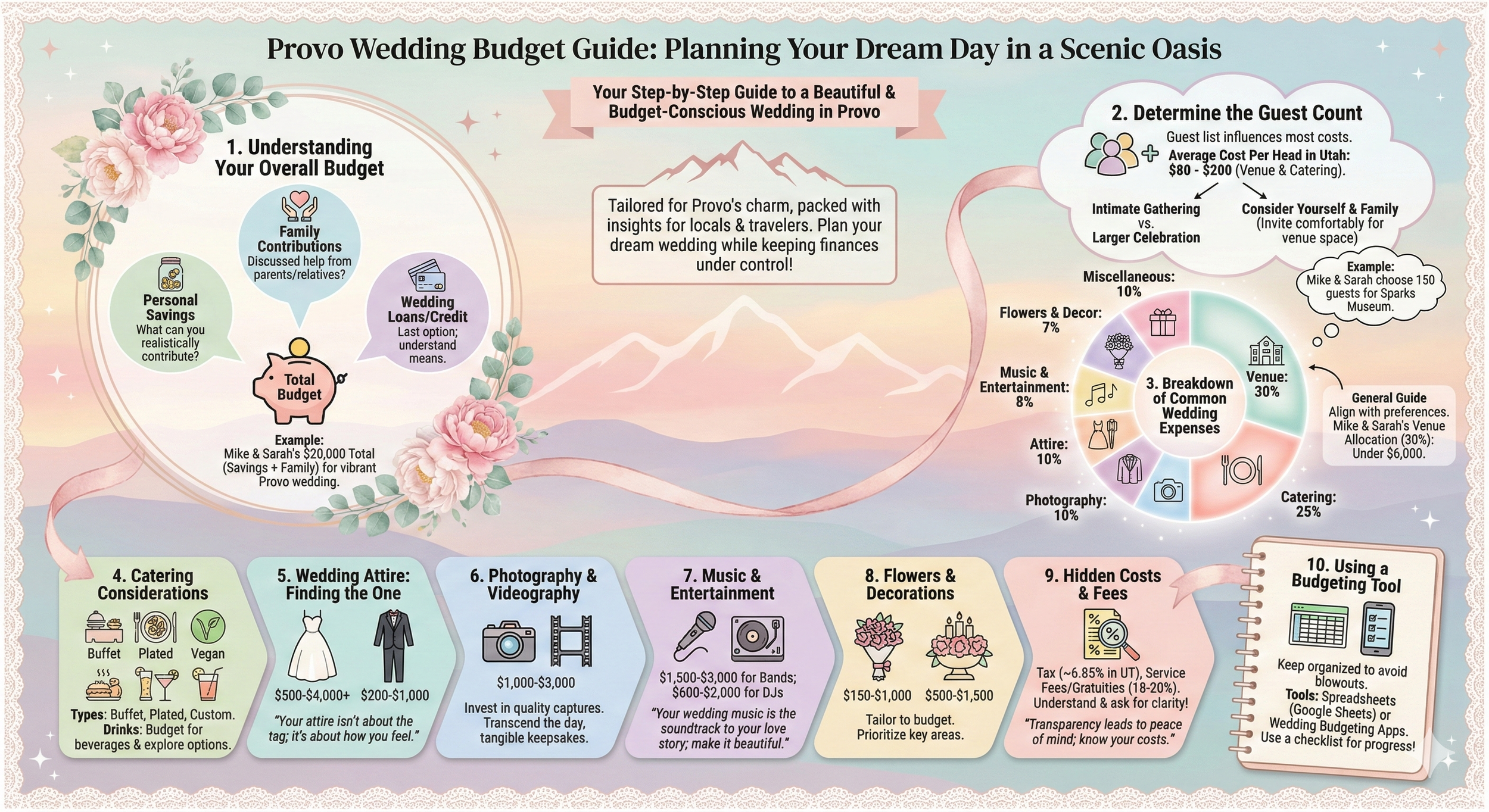
1. Understanding Your Overall Budget
Before diving into specifics, start by determining your total wedding budget.
Assessing Your Finances
Consider all sources of funding. You may have savings set aside, and family members often contribute as well. Here’s a simple breakdown:
Personal Savings: What can you realistically contribute?
Family Contributions: Have you discussed potential help from parents or relatives?
Wedding Loans or Credit: Resorting to loans should be a last option, but understanding your financing means is crucial.
Once you assess all potential financial contributions, you’ll have a clearer picture of your overall budget. Knowing the ‘total’ amounts gives a grounding reference point.
Example: Coupling Contributions
Imagine Mike and Sarah, a couple in Provo eager to wed in the vibrant downtown. Together, they plan to allocate $20,000, including their savings and contributions from family. With a clear total in mind, they can now shape how that amount gets spent across various categories.
2. Determine the Guest Count
Next, consider how many guests to invite. Your guest list directly influences most of your wedding costs.
Cost Per Head
The average cost per person for weddings in Utah can range from $80 to $200, depending on venue and catering quality. If you’re planning for 100 guests, that alone could mean an allocation of $8,000 to $20,000 just for food, drinks, and seating!
Keep this in mind while outlining your guest list:
Intimate Gathering vs. Larger Celebration: Will this be a grand event or a cozy union?
Consider Yourself and Family: Who can you trim or expand? One rule of thumb is to invite as many people you can comfortably find space for at your venue.
Example: Inviting Wisely
Back to Mike and Sarah—they decide on a comfortable list of 150 guests after reviewing their family lens, which aligns well with Sparks Museum's capacity. This guest count now helps delineate their catering budget more precisely.
3. Breakdown of Common Wedding Expenses
Now that you have both a budget and guest count, it’s time to allocate spending across common wedding expense categories.
Venue Costs
The venue often consumes the largest chunk of your budget.
Sparks Museum & Event Center: A unique space in Provo noted for its historic charm—costs here can range from $2,500 to $5,000 depending on the season and package chosen.
Other Options: Compare with potential outdoor settings, chapels, or banquet halls nearby.
Allocating Your Venue Budget
If Mike and Sarah want to spend no more than 30% of their total budget on the venue, they must stick under $6,000.
“Choose the venue that speaks to you—it sets the ambiance for your day.”
Category Allocation
Here’s a general guide to how you could allocate the budget based on averages:
Venue: 30%
Catering: 25%
Photography: 10%
Attire: 10%
Music & Entertainment: 8%
Flowers & Decor: 7%
Miscellaneous: 10%
With these guidelines, start to align your preferences and adjust accordingly.
4. Catering Considerations
Consider your catering options carefully. There's a lot of them and they can get out of control fast.
Your catering choices play a pivotal role in how guests enjoy their experience.
Types of Catering
Buffet Style: Often more affordable but can involve more planning.
Plated Dinners: Presenting a sit-down meal that can increase costs.
Vegan or Custom Menus: Keep dietary restrictions in mind as these can impact pricing.
Budgeting for Drinks
Don’t forget about beverages, often a hidden cost!
Open Bar vs. Cash Bar: Consult your venue for bar options, staggering costs accordingly.
Signature Cocktails: Creating a special drink can personalize your wedding without blowing the budget.
5. Wedding Attire: Finding the One
Your wedding dress and groom's suit or attire come next in the lineup.
Average Costs for Attire
For brides, dresses can vary significantly:
Off-the-Rack: Can be anywhere from $500 to $2,000.
Custom Designs: These can escalate to $4,000 or more.
Grooms typically spend less, around $200-$1,000, depending on rental versus purchase.
“Your attire isn’t about the tag; it’s about how you feel.”
Choosing the right attire also embraces the opportunity to shop local businesses!
6. Photography and Videography
This will be the memories you'll have forever, so make sure and understand your cost and exactly what you get for it.
Your wedding is a moment frozen in time that deserves quality captures.
Understanding Photography Costs
The average cost of hiring a professional in Utah ranges from $1,000 to $3,000, depending on the package and experience.
Choosing Your Photographer: Ensure they resonate with your style—meet and discuss styles before committing to avoid regrettable misalignments.
Secure those Moments
Invest in good photography; captures transcend the day itself, embedding your memories into tangible keepsakes for years to come.
7. Music & Entertainment
Setting the mood is essential, so consider what vibe you wish to create on your big day.
Band or DJ?
Live Bands: This can cost upwards of $1,500 to $3,000.
DJs: Capable of being either affordable or luxurious, usually ranging from $600 to $2,000.
Have fun researching local entertainment options in Provo. What style speaks to you? Do you envision a string quartet at the ceremony, followed by a lively DJ for the reception?
“Your wedding music is the soundtrack to your love story; make it beautiful.”
8. Flowers & Decorations
This will set the tone for the wedding as people walk in and take their time visiting.
Flowers elevate the aesthetic and can be tailored significantly to your budget.
Organizing Flower Budgets
Bridal Bouquets: Average costs vary widely from $150 to $1,000 if you want something particularly extravagant.
Centerpieces/Decor: Allocate around $500-$1,500 based on aesthetics and design preferences.
Prioritize key areas in the venue to spruce up. For Mike and Sarah, capturing the warmth of Sparks Museum through soft florals aligns perfectly with their vision.
9. Hidden Costs and Fees
It’s vital to factor in hidden costs that may arise during the planning.
Tax, Service Fees, and Gratuities
Understand the Tax: Often around 6.85% in Utah; do not overlook this when budgeting.
Service Charges: Many venues or caterers add a gratuity fee ranging from 18-20%. Always ask for clarity on final costs!
This can make or break your budgeting attempts, leaving hidden surprises.
“Transparency leads to peace of mind; know your costs.”
10. Using a Budgeting Tool
Keeping everything organized is essential to avoid budget blowouts.
Choosing Your Tools Wisely
Spreadsheets: Google Sheets allows collaboration for those sharing expenses.
Budgeting Apps: Consider wedding-specific platforms that offer budgeting breakdowns and reminders.
Searching for a detailed checklist? Use this Event Planning Budget Template to keep an overview and manage your progress!
Planning a wedding can feel both exhilarating and overwhelming, but building a realistic budget is your guide to navigating this journey successfully. By assessing your overall budget, understanding the costs associated with various aspects of your celebration, and by using budgeting tools, you set up a balance between your dream wedding and financial sustainability.
Remember, it's all about prioritizing what resonates with you and your partner, ensuring your event reflects your love story. As you explore beautiful venues like Sparks Museum & Event Center, consider how each chosen detail—from decor to catering—harmonizes into a memorable experience.
With all this information, you’re empowered to articulate a budget that meets your needs. Ready to take the next step? Contact us today to schedule a tour or book your event for a stunning day at Sparks that intertwines history with your unforgettable celebration!
FAQs
3 Most Critical Steps of a Wedding Planning
How much do weddings typically cost in Provo, Utah?
Weddings in Provo can range from $15,000 to over $30,000, depending on size, venue choice, and personal preferences.
How can I save money while planning my wedding?
Consider off-peak dates, limit guest counts, DIY decor, or opting for local vendors who offer competitive rates.
Are there hidden costs I should be aware of?
Definitely, including taxes, gratuities, and potential overtime charges from vendors based on extended hours or services.
Do I really need to hire a wedding planner?
While not necessary, they can help save time and enhance the overall process with their expertise, especially for larger weddings.
What is the best way to track my wedding spending?
Utilizing budget tools, spreadsheets, or wedding planning apps can help track all expenses systematically and alert you when deviating from your budget.
Sparks is all about the small businesses and supporting them throughout the country. We have listed some of these wedding venues that we love to support.
How we Host 300+ Guests Without Sacrificing Intimacy or Quality
Discover effective strategies for hosting intimate events at scale at Sparks Museum, where vintage charm meets modern elegance. Learn how to engage 300+ guests with warmth and style.
Discover the secrets to creating a memorable event experience that feels personal, even at scale.
TL;DR (Quick Takeaways)
Selecting the right venue is crucial for large gatherings.
Personalize guest experiences through creative layout and flow.
Invest in quality decor and ambiance to enhance intimacy.
Consider food and beverage options that engage your guests.
Utilize tech for seamless event execution while never missing a moment.
Hosting a large-scale event can feel like a daunting task. With 300 or more guests, the challenges multiply—how can you create an atmosphere that feels both personal and enriching? At Sparks Museum & Event Center, we believe that hosting large events doesn’t have to mean sacrificing the warmth and sense of connection that make gatherings special.
Imagine this: your guests arriving at an elegant venue adorned with vintage decor and modern functionality, a bright ambiance that complements your unique vision. As they mingle amidst lit-up brick walls and art deco details, you know that every detail has been crafted for comfort and connection. Whether it's a grand corporate event or a jubilant wedding reception, larger gatherings can—and should—cater to intimacy and quality. In this guide, we’ll share our top insights and tips to ensure your event is unforgettable, warm, and distinctly unique.
Selecting the Right Venue: The Foundation of a Successful Event
Choosing the right venue can make a world of difference when hosting larger guest counts. A flexible venue lets you customize the space Sparks Museum & Event Centerto your event's needs. At the Sparks Museum, our architectural charm meets modern function, providing a stunning backdrop for any event.
Key Considerations:
Space Layout: Look for a venue with flexible floor plans that can be adapted to different styles, such as a cocktail reception or a seated dinner, without compromising movement and flow.
Capacity Comfortably: Ensure that the venue can comfortably accommodate your guest count with options for smaller breakout areas to create intimate conversation pods.
Visual Appeal: Aesthetically pleasing venues help set the mood. An inviting space allows for personal touches that guests will remember long after the event.
Real Examples
Last summer, we hosted a corporate retreat for a tech company that wanted to engage its team in a productive yet relaxed environment. Using our spacious layout, they transformed the venue with multiple smaller seating arrangements. This encouraged organic conversations, making it feel less like a typical corporate setting and more like a gathering among friends.
“At Sparks Museum, every corner invites conversation and connection.”
Personalizing Guest Experiences
As the guests enter, they're given a goodie bag and something to remember the event by.
When dealing with a large number of attendees, personalization can often feel impossible. However, with a few thoughtful touches, you can cultivate an atmosphere of familiarity and warmth.
Strategies for Personalization:
Interactive Stations: Rather than a traditional buffet, consider food stations featuring different cuisines that allow guests to sample and share. This naturally encourages mingling and connection.
Customized Name Tags: Opt for more than just a name. Include a fun fact or an icebreaker question. This small detail gives guests a conversation starter, breaking down barriers.
Engaging Entertainment: Hire performers or create a themed photo booth that aligns with your event's vision. Enhancing the experience with interactive elements invites your guests to participate fully.
Effective Scenario
A local startup recently launched at our venue. They integrated an interactive digital display that allowed guests to submit their thoughts, ideas, and even photos during the event. Later, they curated this content to share a post-event thank you, making the experience meaningful and memorable for everyone involved.
Creating An Ambiance Full of Intimacy
Even with hundreds in attendance, creating a warm atmosphere is entirely doable. Lighting, decor, and sound play essential roles in achieving this.
Lighting Tips:
Dimmable and Layered Lighting: Our venue features elegant period lighting and contemporary options that enhance the mood. Use warm tones, fairy lights, and spotlights to create comforting zones.
Uplighting: Strategically placed uplighting can draw attention to specific areas, creating focal points and transforming ordinary spaces into extraordinary environments.
Decor Ideas:
Curated Vintage Elements: The character of our venue allows you to mix modern aesthetics with vintage decor—think rustic tables adorned with soft fabrics and live plants to foster a homey feel.
Textures and Layers: Incorporating textures such as lace, wood, and metallics adds depth, creating visual interest and enhancing the overall guest experience.
Add some beautiful elegance to the site.
“The ambiance should be an invitation—welcoming and rich with personal touches.”
Catering to All Taste Buds
For many, food is a core element of any gathering. But with a larger guest list, the pressure to impress grows. Focus on quality over quantity, and curate your menu thoughtfully.
Catering Strategies:
Seasonal and Local: Work with catering services that prioritize fresh, local ingredients. This not only enhances taste but also reduces logistical challenges and supports your community.
Diverse Menu Options: Create a menu that reflects different dietary needs and preferences—vegan, gluten-free, and traditional options ensure that everyone feels catered to.
Tasteful Presentation: How the food is plated and presented matters just as much as what’s served. Beautiful charcuterie boards, colorful veggie platters, or interactive dessert stations invite guests to appreciate the visual and the flavorful.
Case Study
For a summer wedding, a couple opted for a tapas-style dining experience at Sparks Museum. Guests were encouraged to mix and match plates, share stories, and bond over shared culinary experiences, creating a sense of community throughout the celebration.
Leveraging Technology for Seamless Experiences
In today's digital age, technology can bridge the gap between intimacy and scale. By integrating innovative solutions, you can streamline processes that enhance guest experience.
Tech Ideas:
Event Apps: Use app technology for guest check-ins, scheduling tracking, or even real-time updates on program changes. This comforts guests, allowing them to navigate the event effortlessly.
Live Streaming: For hybrid events, consider live streaming portions for family or friends who cannot attend in person. This inclusion fosters closeness even at scale.
Social Media Integration: Encourage guests to share their experiences using a unique event hashtag, creating a digital footprint for your gathering.
Seating Arrangements and Flow
Understanding how to arrange seating effectively is key to creating a blended experience of intimacy and spaciousness. Make it part of your planning.
Seating Layout Suggestions:
Round Tables for Small Groups: Opt for round tables instead of long banquet tables. This creates a sense of community and allows more personal interaction.
Mixed Seating Styles: Combine various seating styles—from traditional chairs to lounge areas so guests can mingle comfortably throughout the event.
At round tables to make this more intimate and fun.
Example from the Field
During a recent multi-generational family reunion at our center, organizers created comfort zones with different seating options—soft armchairs for seniors and lively spots for kids. The area is naturally segmented yet inclusive, allowing families to connect in their own unique ways.
Detailed Planning Timelines: Don’t Rush the Process
Planning for a larger event necessitates organization and foresight. Creating a timeline manages stress, keeps your team on point, and prevents last-minute hiccups.
Timeline Breakdown:
6-12 Months Out: Start with venue selection, establish a budget, and outline your guest list.
3-6 Months Out: Lock down vendors (caterers, entertainment, decor) and begin detailed planning.
1 Month Out: Confirm final headcount, finalize seating arrangements, and ensure vendors are aligned.
1 Week Out: Conduct a run-through with your team to finalize logistics, tech checks, and duties.
Common Mistakes to Avoid
When managing over 300 guests, it's easy to overlook aspects that can make or break the event. Here are a few pitfalls to avoid:
Neglecting Guest Comfort: Always consider the amenities available to guests, including accessibility and comfort stations, especially for larger gatherings.
Waiting Until Last Minute: Don’t leave seating arrangements, decor, and food choices to the last moment. Each detail contributes to the experience.
Engage with Your Guests
Creating a connection with your attendees serves to foster a unique atmosphere throughout the event. Some helpful ways to engage with guests include:
Welcome Gifts: A small welcome pack can include personalized items or local goodies, cherished by guests.
Interactive Activities: Plan mini activities or challenges throughout the event to encourage guest interaction.
“It’s the small gestures that leave lasting impressions.”
Hosting 300+ guests can be an exhilarating experience packed with joy, laughter, and connection—when planned thoughtfully. At Sparks Museum & Event Center, we embrace the challenge of blending large-scale hospitality with intimate experiences, ensuring your distinctive vision comes to life in unforgettable ways. As you embark on your event planning journey, remember that your goal is to create not just a gathering, but a celebration of connections, memories, and individuality.
As you continue down this exciting path, take the time to explore our venue, get inspired by our past events, and discuss your unique vision with our team. Book your tour today to see how we can help you bring your dreams into reality!
FAQs
What is the ideal venue size for hosting 300+ guests?
Choosing a venue that not only fits the number of guests but also feels spacious is key. Look for venues that offer flexible space for mingling, dining, and entertainment. It’s important to select spaces that can comfortably accommodate movement without feeling packed.
How can I create an intimate atmosphere for a large event?
Focus on lighting, seating arrangements, and personalized experiences. Using smaller group clusters instead of one long table, choosing warm lighting, and integrating interactive elements can help guests connect with each other in meaningful ways.
What should I consider when planning catering for a large group?
Prioritize quality and variety in your menu. Work with experienced caterers who can provide local and seasonal dishes that accommodate different dietary preferences. Beautiful presentation can also take your catering from ordinary to extraordinary.
How do I manage tech for a seamless event?
Invest in apps for check-ins and schedules, and look into live-streaming services if you have guests tuning in from afar. A well-planned tech setup ensures everything runs smoothly, allowing you to focus on your guests.
How can I ensure accessibility for all guests?
Ensure pathways are clear and provide seating that is comfortable for everyone. Offer multiple options for engaging with the event, such as quiet spaces or areas for those who may need a break from the hustle and bustle.
Check out some of our favorite venues around the country and see what is available and other options if you are getting married outside of Utah.

